Professional Grain Store Rodent Control
Protecting stored grain from rodent contamination, damage and avoidable losses.

Why Grain Stores Are Vulnerable
What Rodents Need
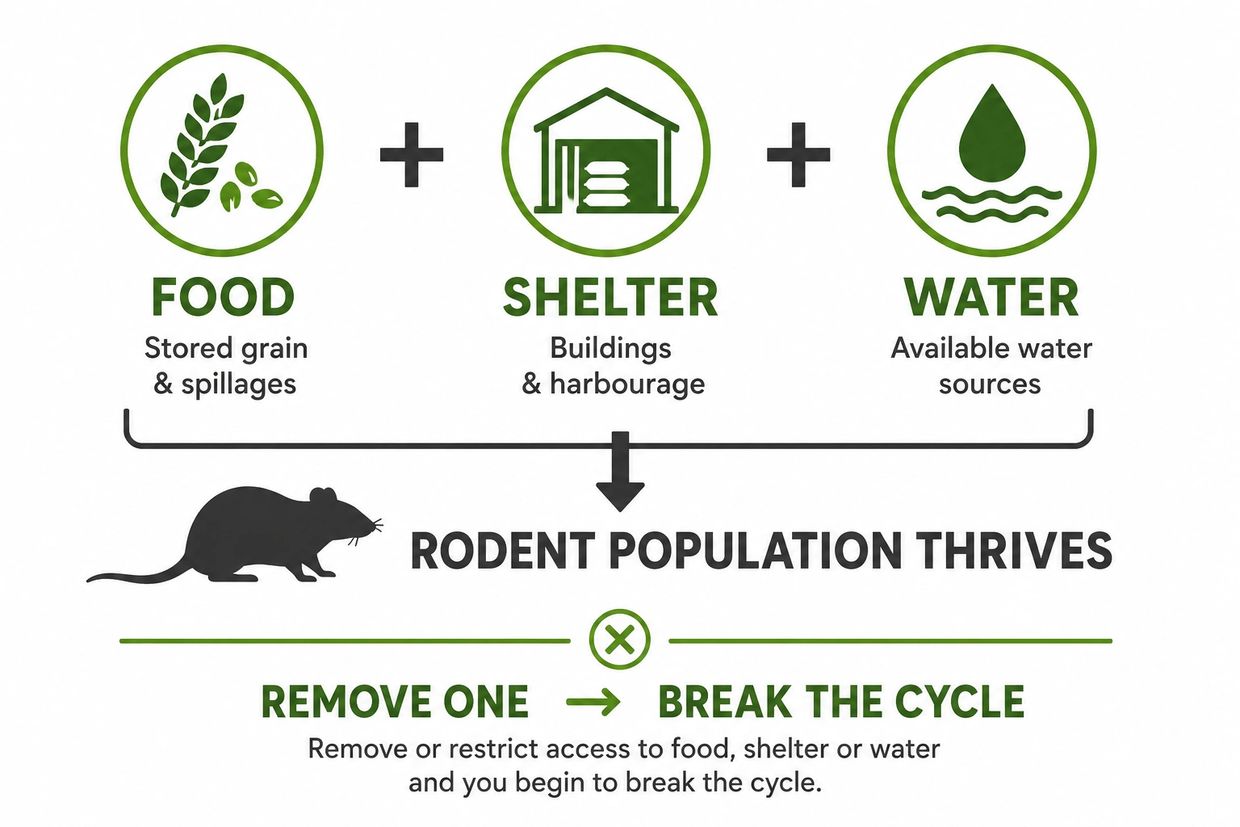
Rats need three things to survive and thrive: food, shelter and water.
Grain stores provide an abundant food source and can offer excellent harbourage, while water may be available elsewhere around the site.
Breaking the Cycle
Effective rodent management looks beyond simply controlling the rodents present.
Remove or restrict access to food, shelter or water and you begin to break the cycle that allows the population to thrive.
More Than Just Grain Loss
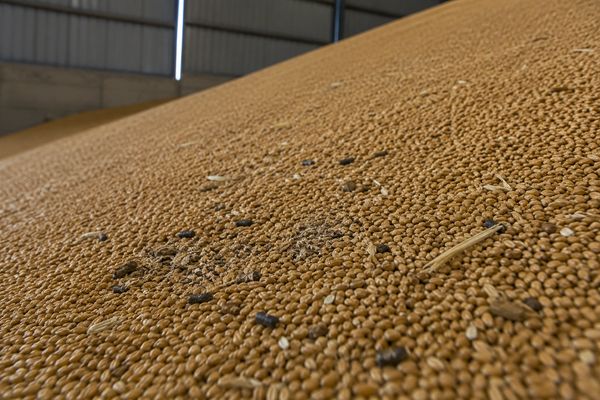
The amount of grain consumed by rodents may be relatively small compared with the potential losses caused by contamination.
Rats and mice can contaminate stored grain with urine and droppings, potentially affecting considerably more produce than they actually consume.
Rodent activity can also damage buildings, equipment and packaging, while creating concerns around hygiene, crop contamination and farm assurance requirements.
The grain they eat may be the least significant part of the problem.
Understanding Where the Problem Starts
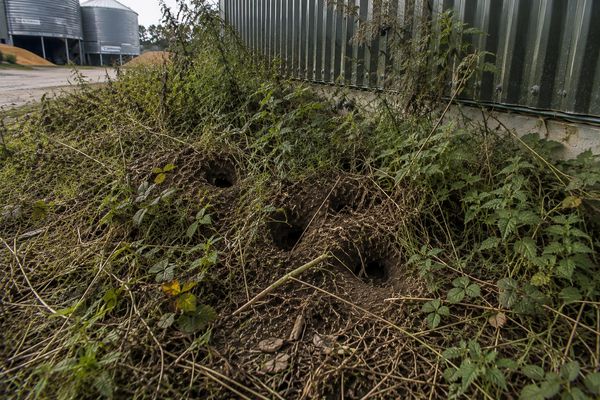
Successful rodent management begins with understanding how rodents are using the site.
A thorough inspection looks for evidence including droppings, tracks, burrows, gnawing, entry points and established movement routes, together with the food, water and harbourage available around the site.
Activity around adjoining buildings and surrounding land also needs to be considered.
Understanding where the problem originates allows the control programme to be designed around the site, rather than simply reacting to the rodents being seen.
Clear Documentation & Traceability
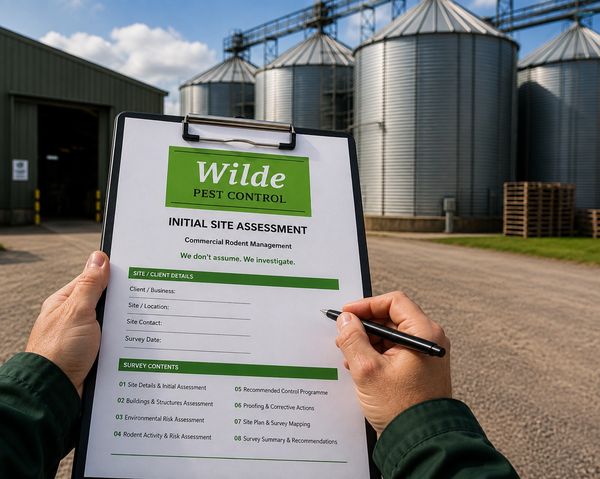
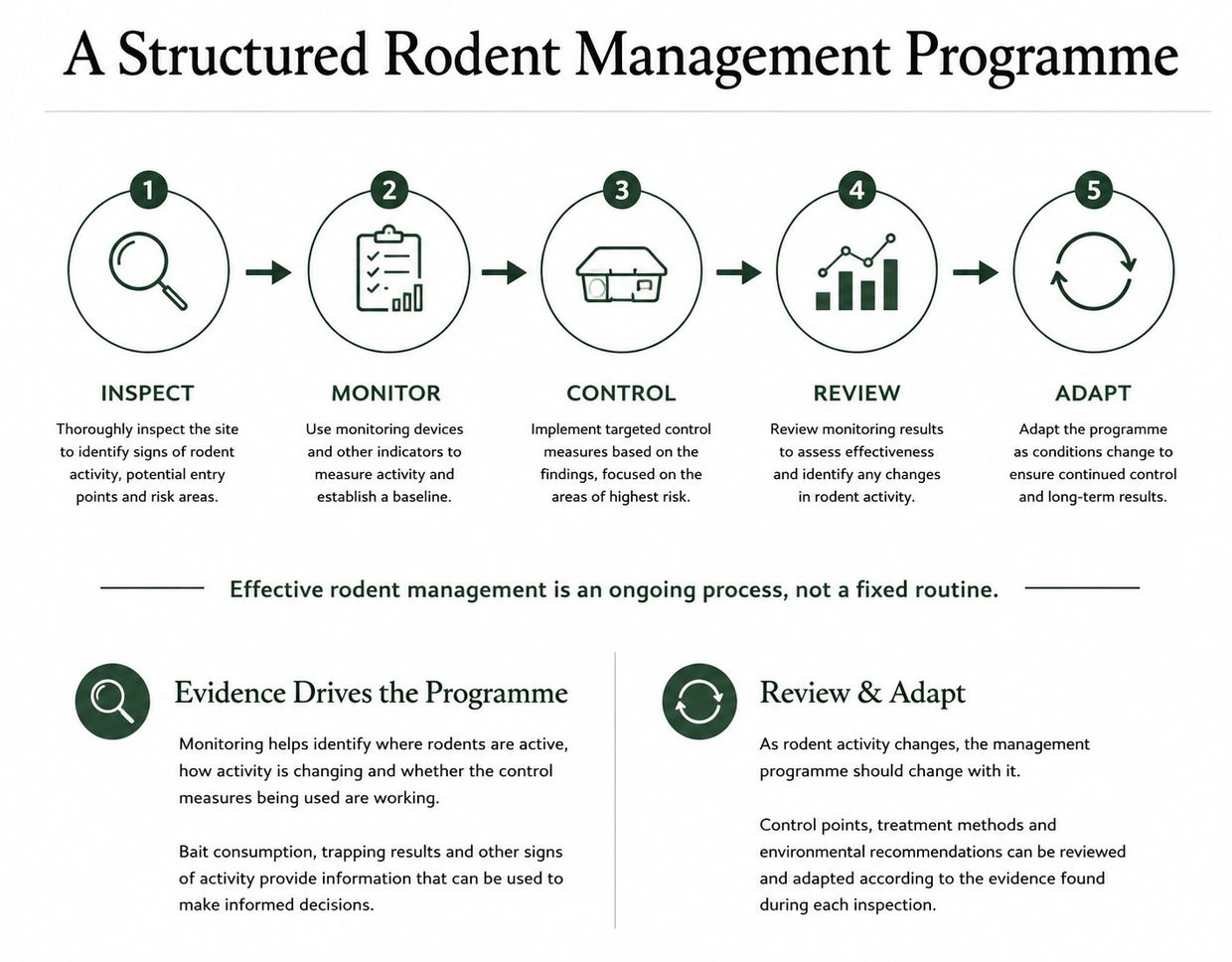
Good documentation should explain what is happening on site — not simply prove that a visit took place.
Accurate records provide a clear picture of rodent activity over time and help demonstrate whether the management programme is working.
Bait consumption, monitoring results, activity levels and changes to the programme should be recorded so that trends can be identified and decisions justified.
For grain stores operating under farm assurance requirements, clear documentation also provides evidence that rodent risks are being actively monitored and managed.
The paperwork should support the management programme, not become the management programme.

Managing Rodent Pressure Around Harvest
Harvest can rapidly change the conditions around a grain store.
As grain stores fill, harvesting and grain handling can increase the availability of accessible food around the site. Harvest operations can also disturb rodents living in surrounding fields, buildings and harbourage.
This can increase rodent pressure around grain stores at precisely the time when protecting stored produce becomes most important.
Monitoring should therefore respond to changing conditions.
An increase in activity, bait consumption or other field signs should trigger investigation and, where necessary, a change to the management programme.
Preparing the store before harvest, reducing spillages and maintaining good housekeeping can also remove opportunities before rodents exploit them.